The corrugated carton is one of the most widely used packaging solutions in the global packaging industry. Due to its lightweight structure, strong compression resistance, and low production cost, corrugated packaging is extensively used in logistics, e-commerce, food, electronics, and industrial transportation.
A modern corrugated carton production line integrates corrugated board manufacturing, flexo printing, die-cutting, slotting, folding, gluing, and stitching into a highly automated process. This article explains the complete workflow, key machines, and international testing standards used in advanced carton manufacturing systems.
I. What Is a Corrugated Carton Production Line?
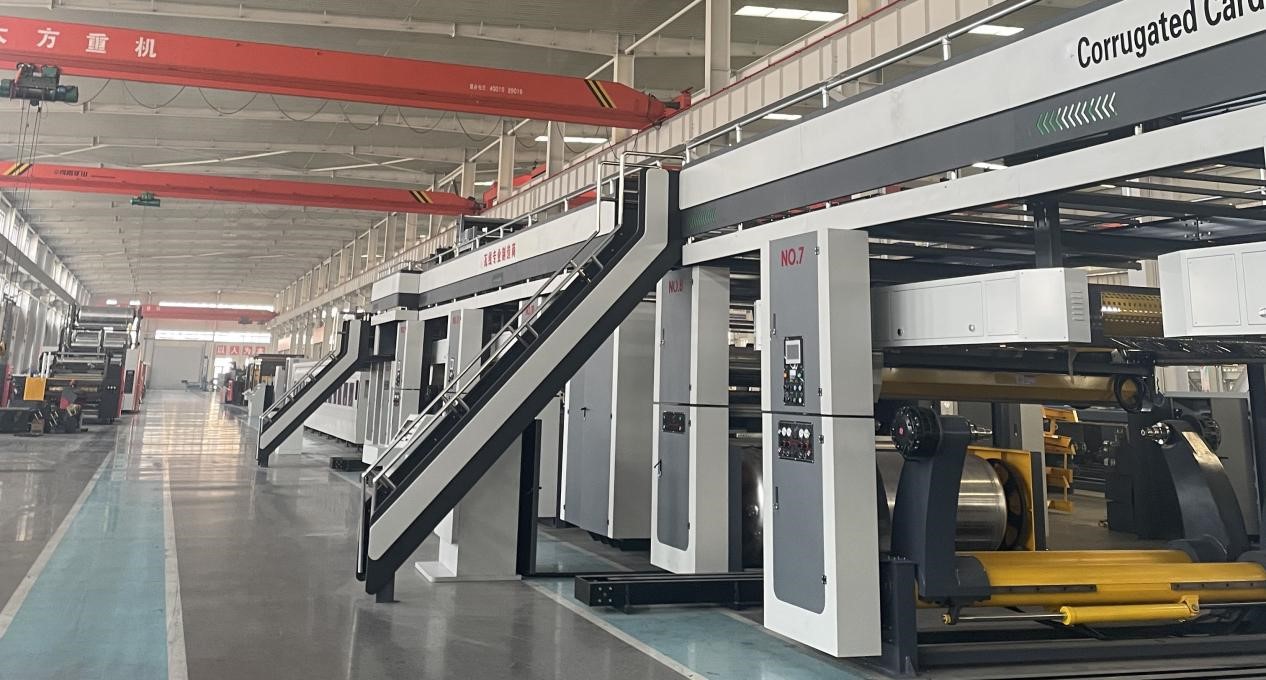
A corrugated carton production line is a complete industrial system used to manufacture corrugated cardboard sheets and convert them into finished cartons.
The production process is generally divided into two major sections:
- Corrugated Board Production (Wet End)
- Carton Printing & Converting (Dry End)
Modern fully automatic lines can achieve high-speed continuous production while reducing labor cost and material waste.
II. Corrugated Board Production Process (Wet End)
The wet end is responsible for producing corrugated cardboard sheets by bonding liner paper and corrugated medium together.
1. Mill Roll Stand & Preheater
Large paper rolls are mounted on the mill roll stand and transported under automatic tension control.
The preheater adjusts paper temperature and moisture content to ensure stable flute forming and adhesive bonding quality.
Main Functions:
- Stable paper feeding
- Moisture control
- Improved bonding performance
- Reduced board warping
2. Single Facer Machine
The single facer is the core machine of the corrugated board production line.
The corrugated medium is pressed through heated corrugating rollers to form flute profiles such as:
- A Flute
- B Flute
- C Flute
- E Flute
After corrugation, starch adhesive is applied to the flute tips, and the medium is bonded with the liner paper to form single-face corrugated board.
Advantages:
- High-speed flute forming
- Precise flute profile
- Strong bonding strength
- Stable board quality
3. Double Facer & Drying Section
The single-face board enters the double facer section, where another liner paper layer is added.
The board then passes through heating plates and a drying system to cure the adhesive completely.
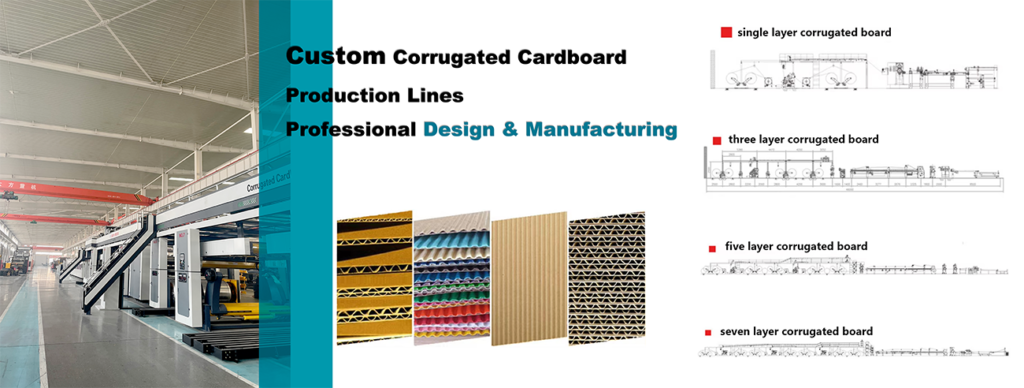
Depending on production requirements, the line can produce:
- 3-layer corrugated board
- 5-layer corrugated board
- 7-layer heavy-duty corrugated board
4. Slitting, Cut-Off & Stacking
After cooling, the corrugated board is processed through:
- Slitting
- Scoring
- Cross cutting
- Automatic stacking
The finished sheets are then transferred to downstream converting machines.
III. Carton Printing & Converting Process (Dry End)
After corrugated board production, the sheets are converted into finished cartons through printing, slotting, die-cutting, folding, gluing, or stitching.
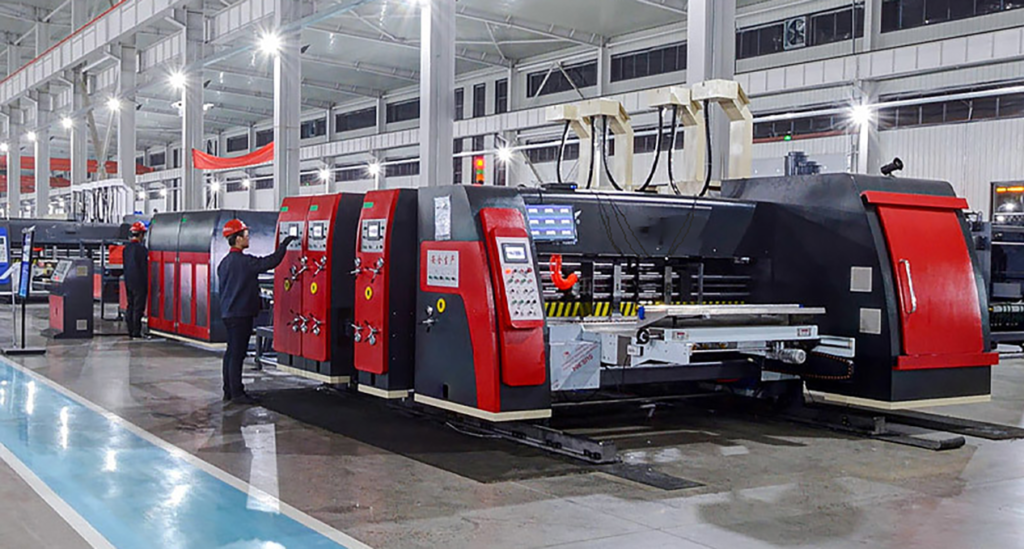
1. Flexo Printing Machine
Modern high-speed flexographic printing machines use full-computer servo control systems for accurate multi-color registration.
Features:
- High-definition printing
- Automatic registration adjustment
- Fast order changeover
- Reduced printing waste
These machines are widely used for e-commerce cartons, industrial packaging boxes, and branded shipping cartons.
2. Slotting & Die-Cutting Machine
Slotting and die-cutting units complete carton shaping operations, including:
- Creasing
- Slotting
- Corner cutting
- Handle hole punching
- Custom-shaped carton cutting
Rotary die-cutting technology significantly improves production efficiency for mass production orders.
3. Folder Gluer & Carton Stitching Machine
The final stage involves carton folding and joint forming.
Manufacturers can choose between:
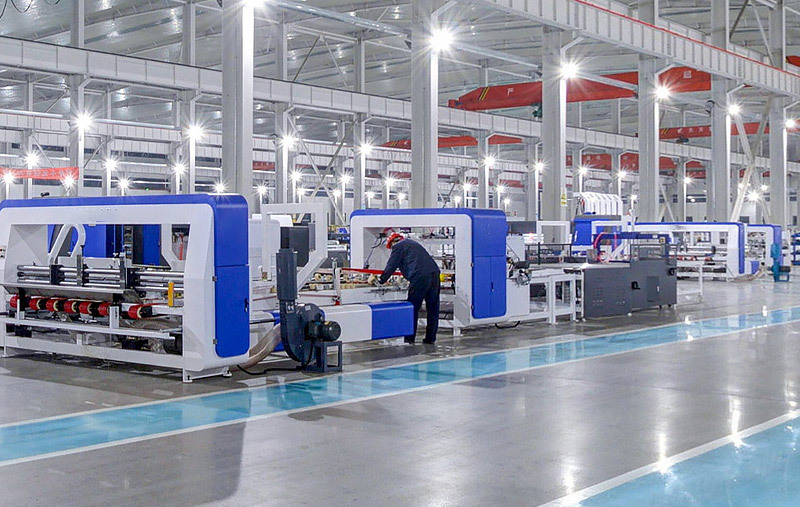
Folder Gluer
Suitable for:
- Standard cartons
- High-speed production
- Lightweight packaging
Corrugated Carton Stitching Machine
Suitable for:
- Heavy-duty cartons
- Large-size boxes
- Export packaging
- High-strength joint requirements
Carton stitching provides stronger mechanical fastening and better durability during transportation.
IV. Key Technologies in Modern Corrugated Carton Production Lines
Advanced packaging machinery manufacturers continuously improve automation, precision, and production efficiency.
Full-Computer Control System
Modern machines support:
- One-key order change
- Automatic memory settings
- Touchscreen operation
- Remote diagnostics
Benefits:
- Reduced setup time
- Faster production switching
- Lower labor dependency
Servo Direct Drive Technology
Servo control systems improve:
- Feeding accuracy
- Printing registration
- Die-cutting precision
- Machine response speed
This technology also reduces vibration, mechanical wear, and paper waste.
High Automation Integration
A fully automatic corrugated carton production line enables continuous production from raw paper rolls to finished cartons.
Advantages:
- Lower labor cost
- Higher production efficiency
- Reduced downtime
- Consistent product quality
Modular OEM & ODM Solutions
Modern carton factories often require customized production solutions.
A professional packaging machinery supplier can provide:
- Single machine solutions
- Semi-automatic lines
- Fully automatic carton production lines
- OEM & ODM customization
Modules such as printing, die-cutting, folder gluer, and stitching systems can be flexibly combined according to customer requirements.
V. International Packaging Standards for Corrugated Cartons
International testing standards are essential for ensuring carton quality, export compliance, and transportation safety.
Professional carton manufacturers and packaging exporters commonly follow standards established by the following organizations:
| Organization | Main Focus |
|---|---|
| ISO (International Organization for Standardization) | Global testing standards |
| FEFCO | European corrugated board standards |
| ASTM International | U.S. packaging material standards |
| ISTA | Transport simulation testing |
VI. Important ISO Testing Standards for Corrugated Board
The following ISO standards are widely used in the corrugated packaging industry:
| ISO Standard | Testing Method |
|---|---|
| ISO 187 | Standard atmosphere for conditioning paper and board |
| ISO 535 | Cobb water absorption test |
| ISO 536 | Grammage determination |
| ISO 186 | Sampling procedures |
| ISO 2759 | Burst strength test |
| ISO 3035 | Flat crush resistance (FCT) |
| ISO 3036 | Puncture resistance |
| ISO 3037 | Edge crush resistance (ECT) |
These testing standards help ensure carton durability, stacking strength, and transportation safety for global export markets.
VII. Why Choose an Advanced Corrugated Carton Production Line?
An efficient corrugated carton manufacturing system can help packaging companies achieve:
- Higher production capacity
- Reduced operating costs
- Better printing quality
- Faster order delivery
- Lower material waste
- Stronger export competitiveness
With the rapid growth of e-commerce and global logistics industries, demand for high-speed automatic carton machinery continues to increase worldwide.
Conclusion
A modern corrugated carton production line combines mechanical engineering, automation control, and material processing technologies into a complete packaging manufacturing solution.
From corrugated board production to flexo printing, die-cutting, folder gluing, and carton stitching, every process directly impacts carton quality and production efficiency.
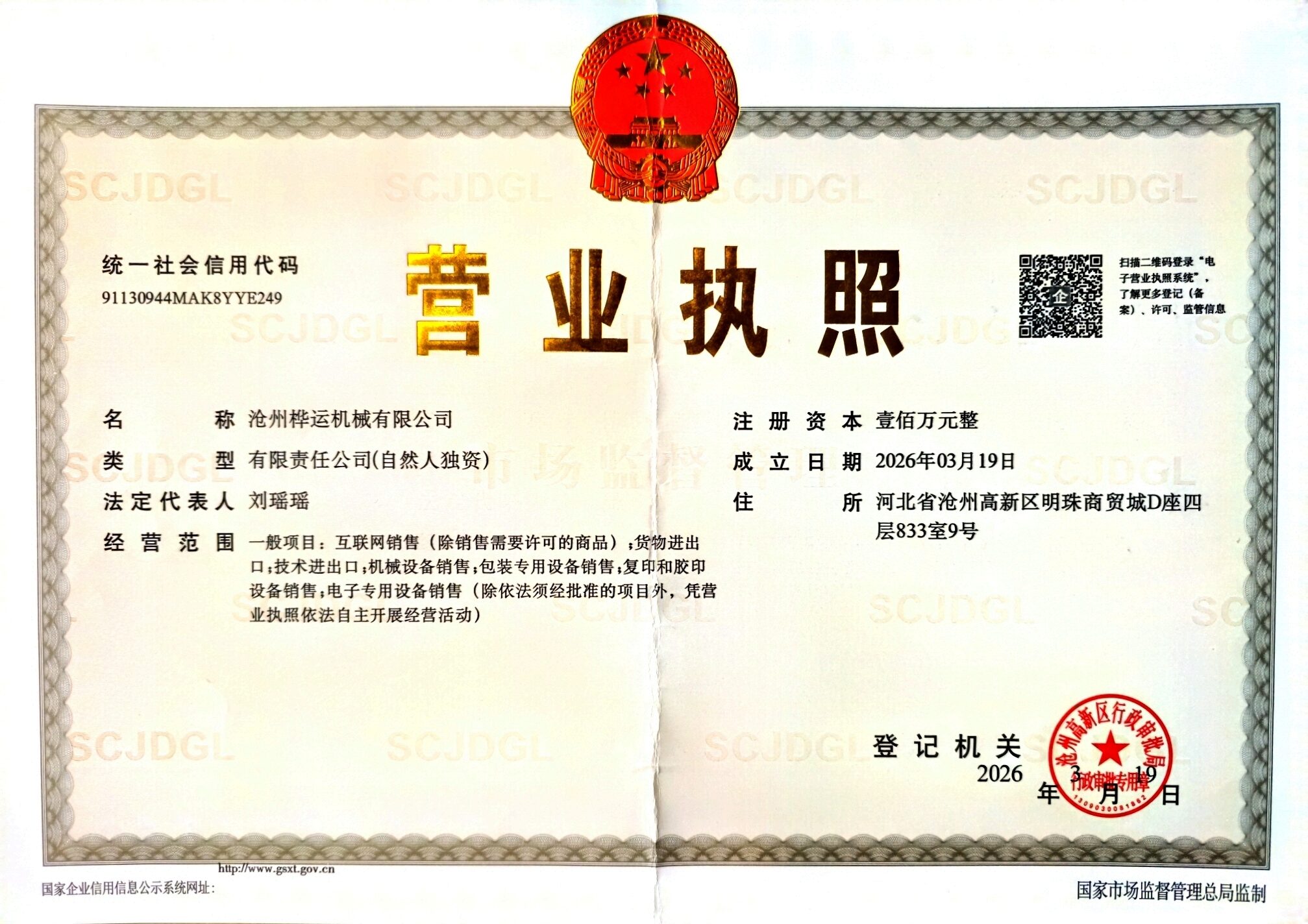
As a professional packaging machinery manufacturer, Cangzhou Huayun Packaging Machinery Co., Ltd. is committed to providing high-performance corrugated carton production solutions for global customers through precision manufacturing, intelligent automation, and customized OEM/ODM services.